
Electricity prices have been an interesting political talking point over the last few years. The ALP went to the last election promising to reduce household electricity bills by $275. Currently, the Coalition, who are now in opposition, are deciding rather publicly if they should abandon the net-zero targets, which see a change in the mix from fossil fuels to more environmentally friendly sources collectively known as ‘Renewables’.
So let’s look at the current state of play.
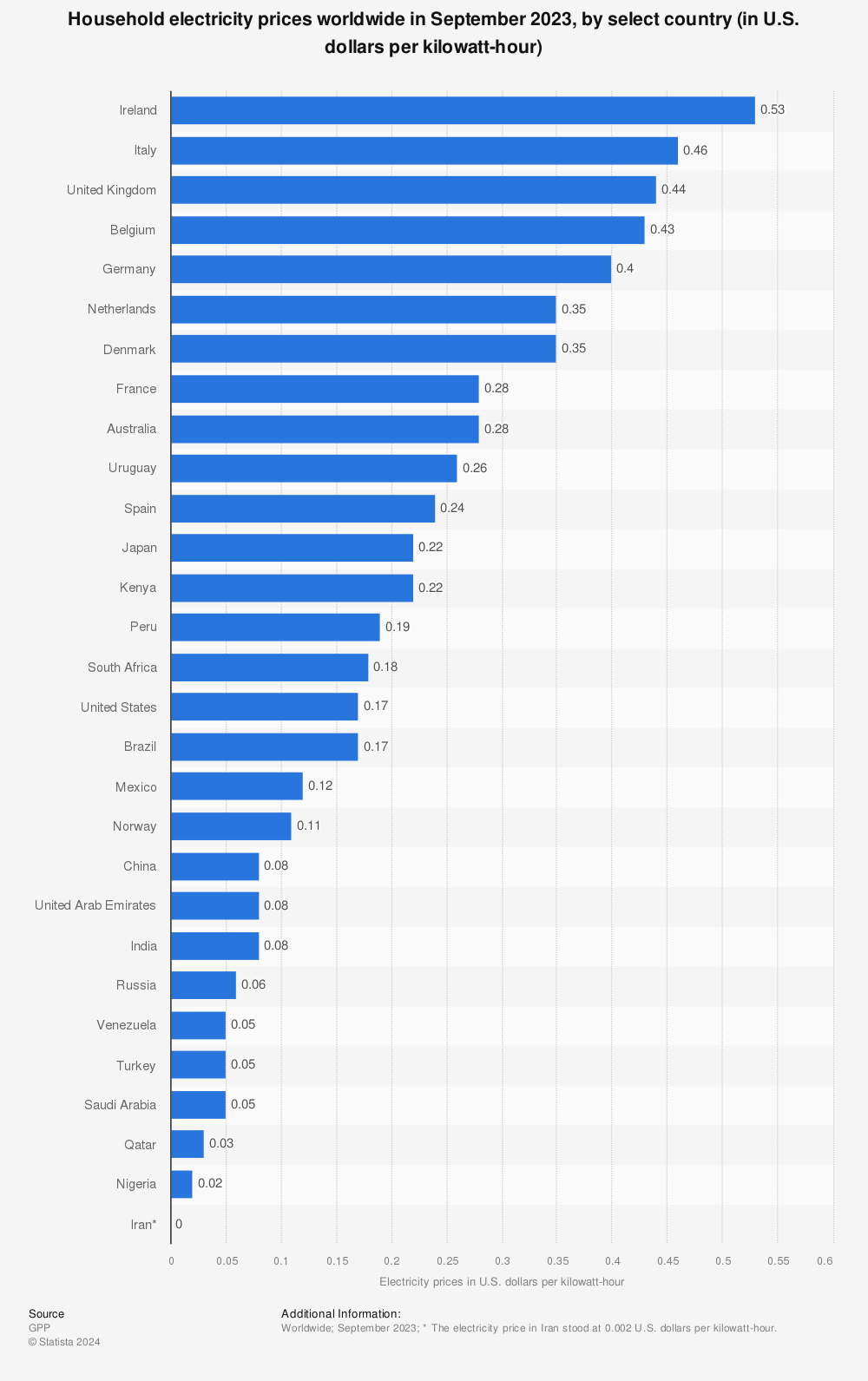
Below we have a graph of the relative cost incurred by Australian households for electricity when compared to other countries.
If we look at the Australian Energy Statistics – Update Report 2025 (August 2025) produced by the Department of Climate Change, Energy, the Environment and Water, we see the following interesting takeaways.
This is often touted by Chris Bowen, but electricity generation from renewables in Australia is now up to 36%. This has seen growth rates of 10.3% per annum for the last 10 years. At face value, this sounds quite an interesting point, and that great progress is being made in the race to net zero.
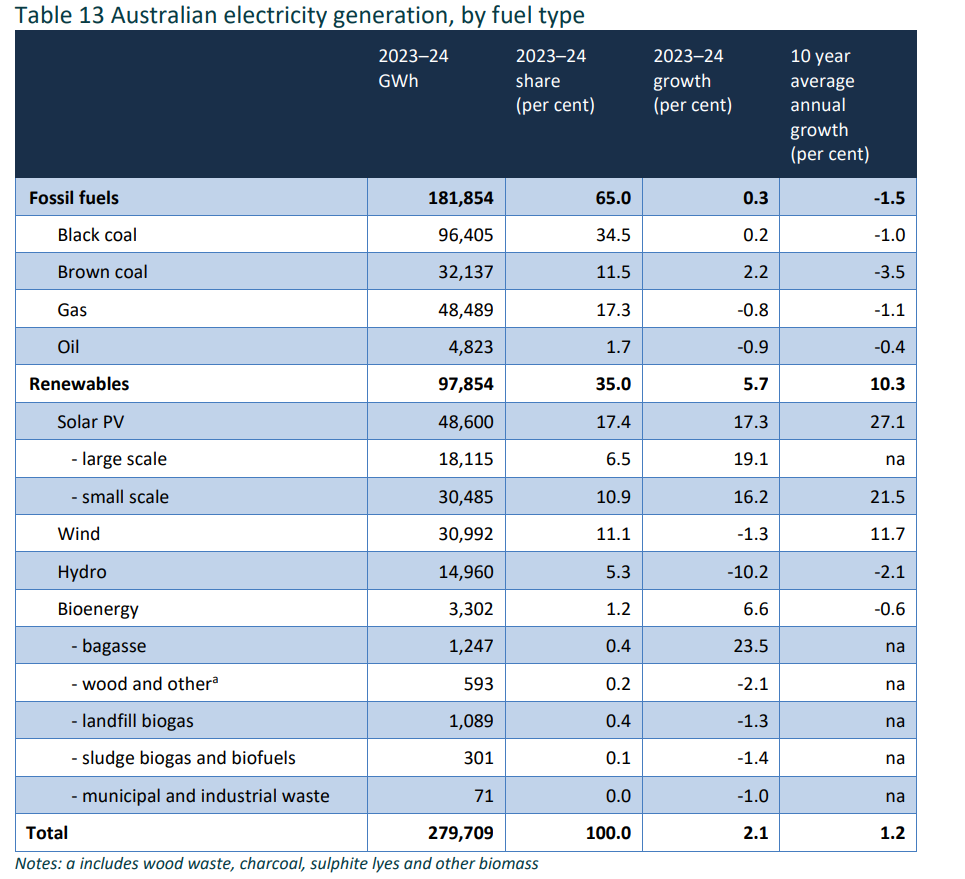
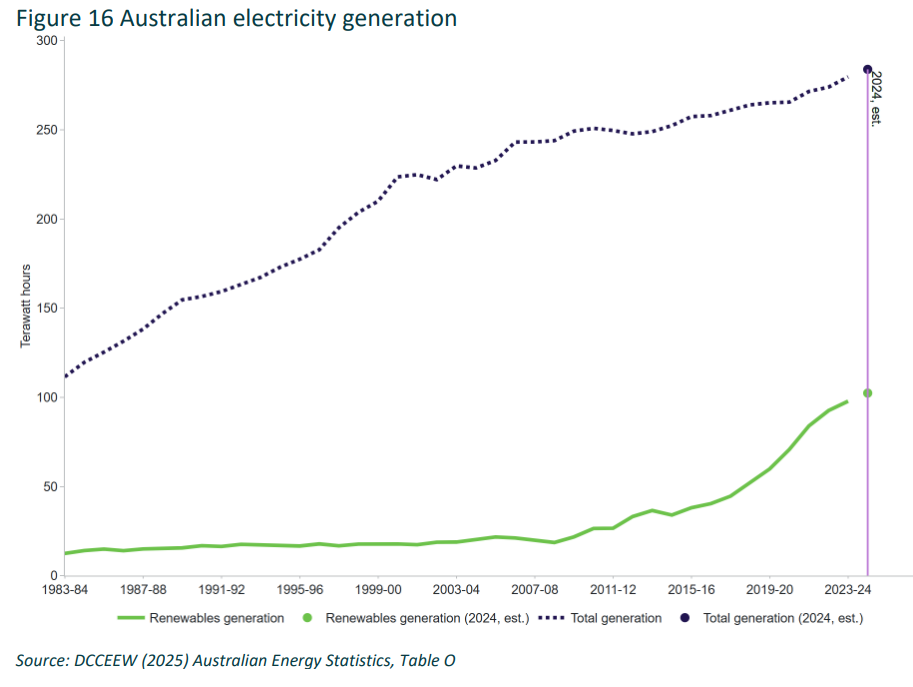
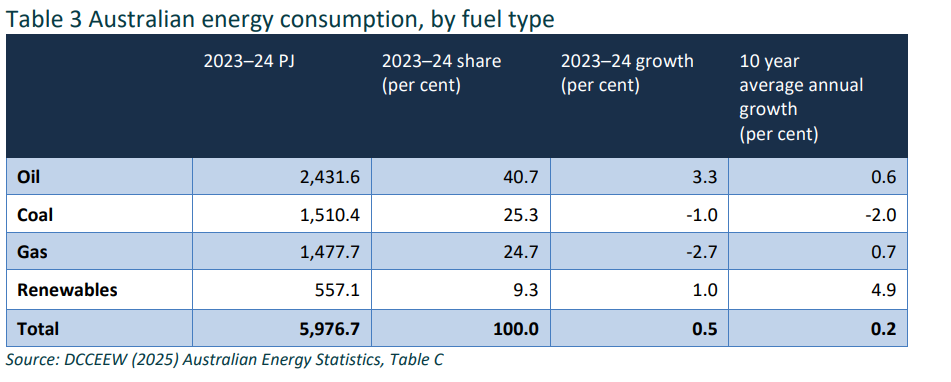
However, the problem is that electricity generation, 1,007 Petajoules, is only a subset of the total energy that is used in the Australian economy. In fact, the total energy consumed is approximately 6 times the amount of that used electricity generated, coming in at 5,977 Petajoules.
NOTE: We export coal and gas that equate to 15,292 Petajoules, which is not included in this figure.
When we look at all energy consumption, our share of renewables falls to 9.3%. This equates to a growth rate of 4.9% per annum over the last 10 years. Based on this growth rate, it will take decades for renewables to replace the fossil fuel sources of energy to any meaningful proportion. Given that we sell three times as much energy as we use in the form of coal and gas overseas, it is arguable that we should include that in our calculations of our impact on emissions.
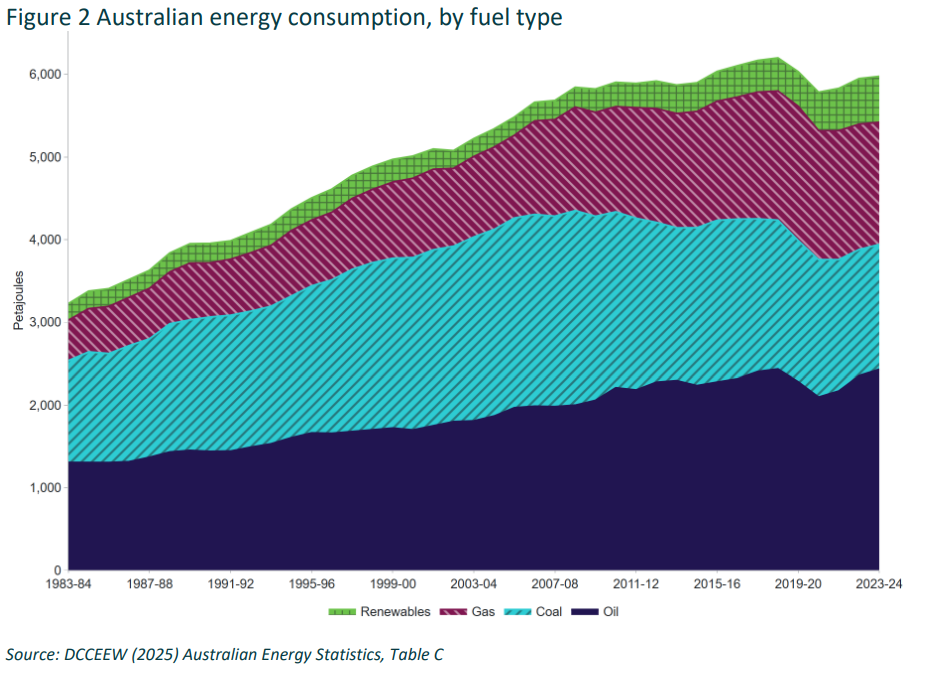
Interestingly, one sector that saw a decrease in total energy use was the manufacturing sector, which declined by 7% over the year, “due in part to business closures”.
When we look at the above table, we can see that Australia is still reliant on coal, and whilst domestic use decreased modestly over the past 40 years, we still export a lot of it. About 80% of Australia’s energy production is exported, and it comprises coal and gas (around 15,292 Petajoules). In the period covered by the report, FY2024 coal exports increased 5%.
Energy imports rose 2% to 2,320 Petajoules and consisted mainly of crude oil and refined products. Imports of crude oil rose over the period by 6%. 79% of refined petroleum product consumption was met by imports in 2023-2024, the highest on record.
Given that we export so much energy, one would think logically that we should be sitting at the bottom of the list regarding the cost of energy/electricity with places like Russia. The fact that we are not means that we need to ask some serious questions as to why this is the case, as energy and its affordability are one of the main determinants of economic prosperity.
Written by Rob Coyte – CEO, Shartru Wealth